
Before Rome Claimed It All
What the Church Looked Like Before the Break

Let me be honest with you before we go anywhere.
I’m not writing this to make Catholics feel bad. I’m not writing this to score points for Orthodoxy or to tell you that one billion Western Christians are lost. That’s not what I believe, and that’s not what the Church teaches. What I am going to do is take you somewhere most people never get to go — back behind the headlines, behind the debates, behind the internet arguments — to what the Church actually looked like before any of this broke apart.
Because something broke. And you deserve to know what it was, how it happened, and what was lost.
Matthew 7:1 — “Do not judge, so that you may not be judged.”
That’s the frame. We’re not here to condemn. We’re here to understand.
It Didn’t Start in Rome
The Church began in a rented upper room in Jerusalem. Fire came down on frightened people. And from that moment, Christianity spread — not through armies or institutions, but through witness, martyrdom, and the stubborn conviction that God had actually walked among us.
For its first thousand years, that Church was one. Fractured at times, argued at times — yes. But one. And its center of gravity was not Rome.
It was the Greek-speaking East.
Alexandria had the greatest Christian school of learning in the ancient world — producing theologians like Origen, Clement, and Athanasius. Antioch produced John Chrysostom. Cappadocia — a region in what is now central Turkey — gave us Basil the Great, Gregory the Theologian, and Gregory of Nyssa. These three men gave the entire Church its language for understanding the Trinity. East and West both received it. It came from the East.
Rome mattered. Peter and Paul died there. The Bishop of Rome was honored — genuinely, sincerely, first among equals. But first among equals is not the same thing as supreme ruler of the whole Church. And that distinction is everything.
Constantinople: The City the World Forgot
In 330 AD, Emperor Constantine moved the capital of the Roman Empire to a city on the Bosphorus — the narrow strait between Europe and Asia. He called it Constantinople. The New Rome.
This wasn’t just politics. It was a civilizational shift. The Church followed the empire eastward, and what grew up there over the next thousand years was one of the most extraordinary Christian civilizations the world has ever seen.
---Hagia Sophia — the Great Church of Constantinople. For nearly a thousand years, the largest and most theologically significant building in the Christian world.
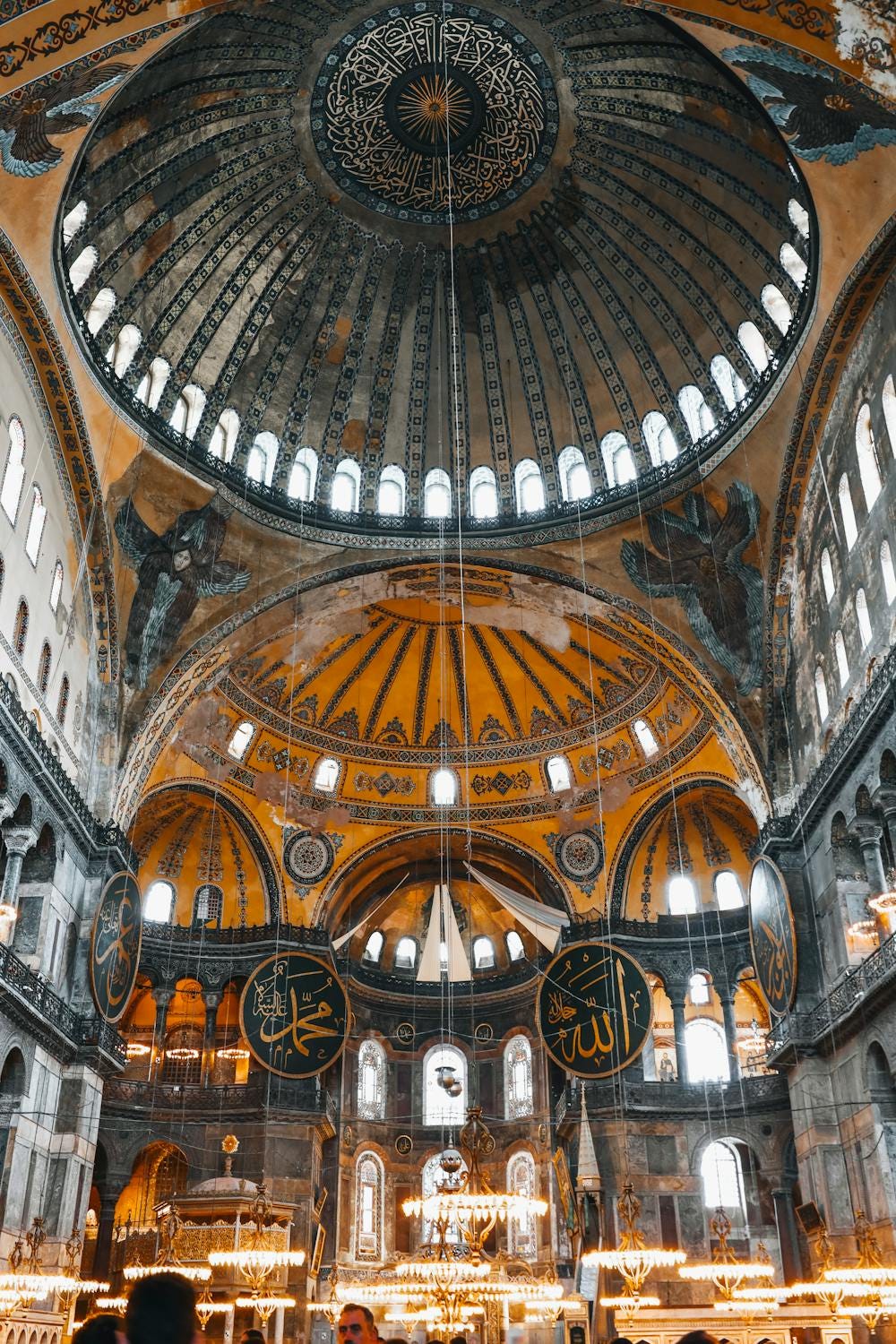
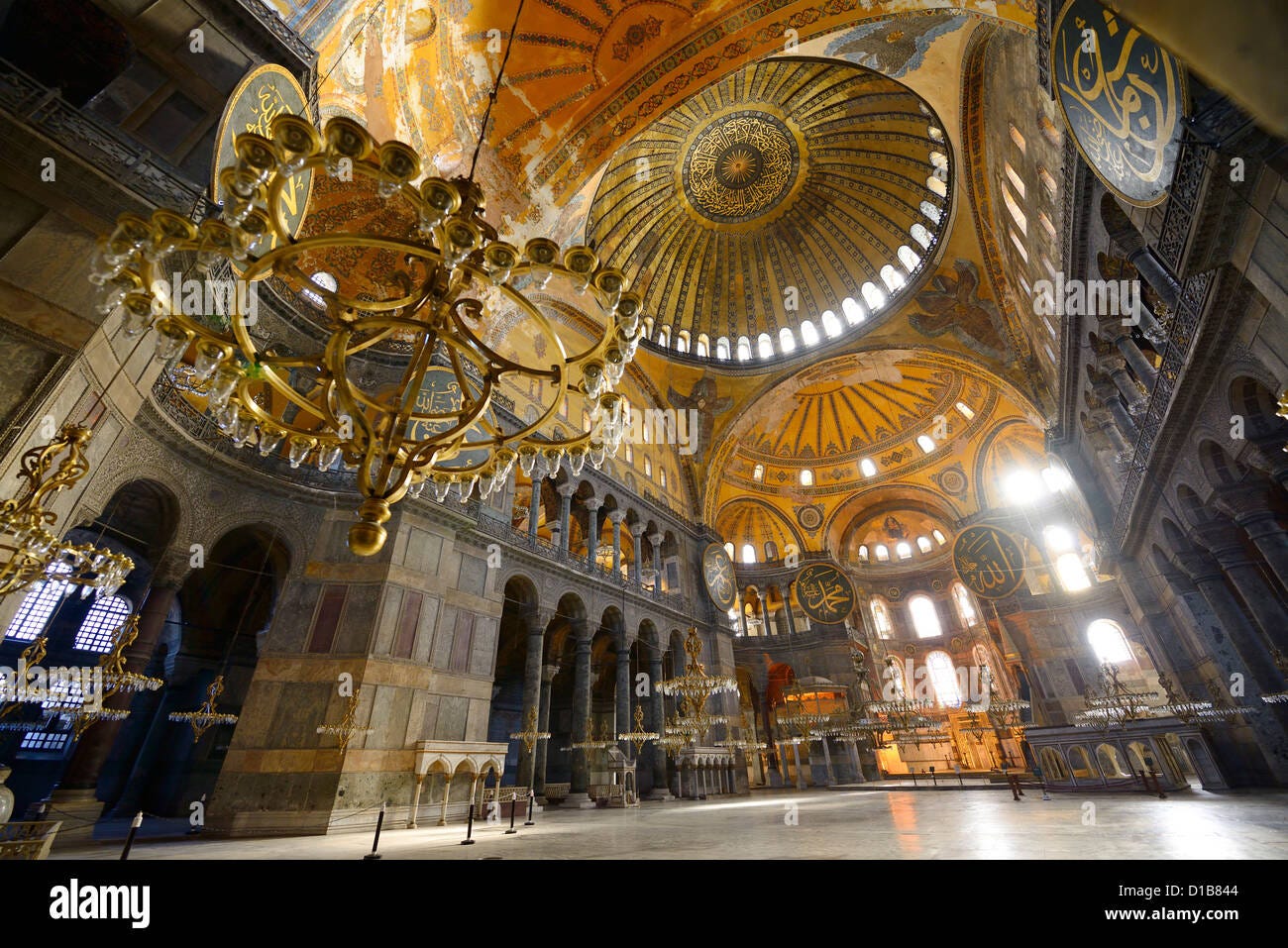
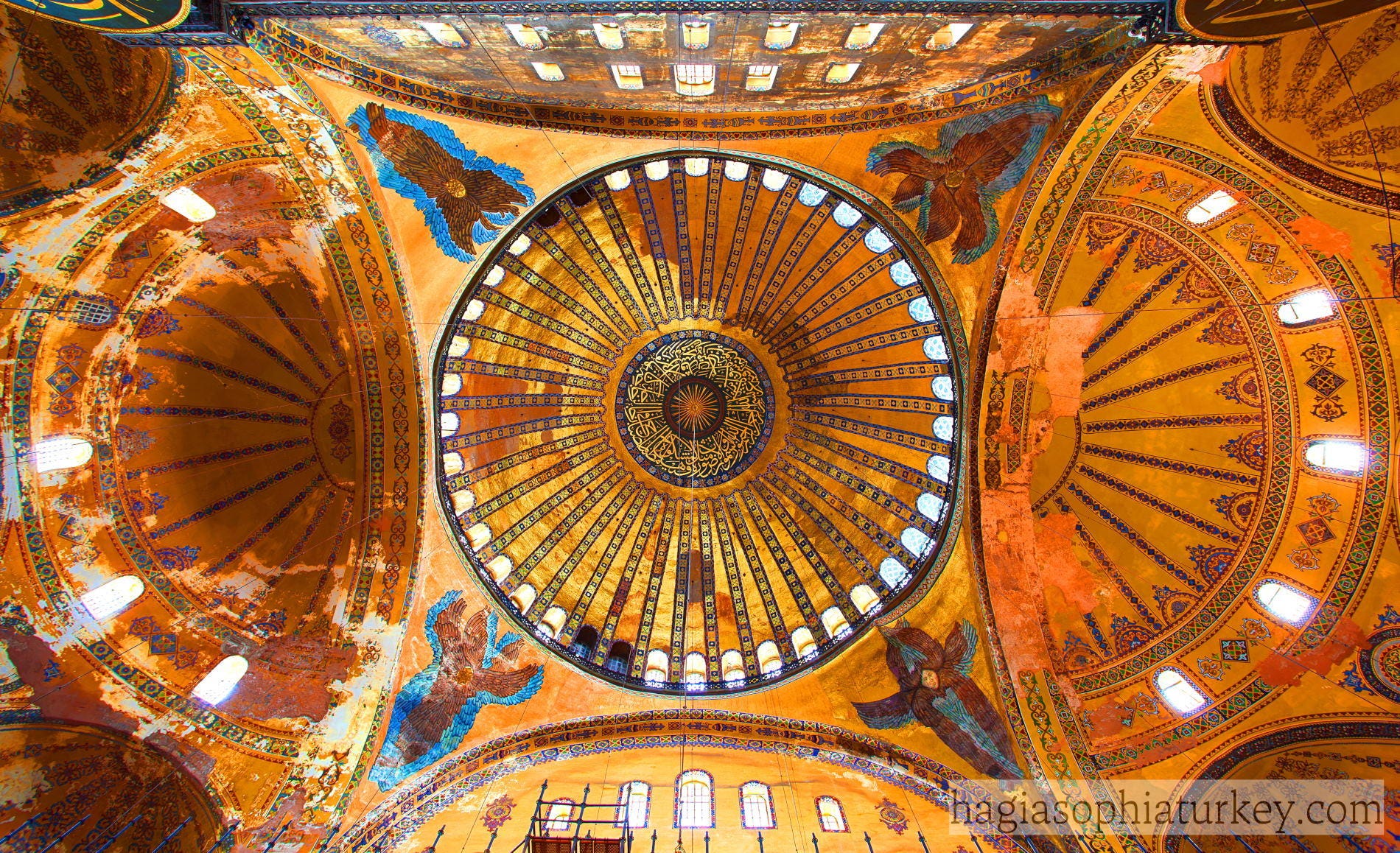
Hagia Sophia — the Church of Holy Wisdom — was completed in 537 AD and stood as the architectural crown of Christian civilization for nearly a thousand years. When you walk inside, you don’t feel like you’re in a building. You feel like the dome is floating. You feel like you’ve stepped into another order of reality.
That was intentional. Byzantine architecture was not showing off. It was making a theological argument in stone, light, and gold: that heaven and earth can touch. That matter, when consecrated, becomes a vehicle for the divine.
When Prince Vladimir of Kyiv sent emissaries in 987 AD to investigate the world’s religions, they came back from Constantinople having witnessed the Divine Liturgy inside Hagia Sophia. Their report to the prince is one of the most famous sentences in religious history:
“We knew not whether we were in heaven or on earth. For on earth there is no such splendor or such beauty. We cannot forget that beauty.”
They were not describing architecture. They were describing an encounter with God, mediated through a civilization that had organized itself entirely around it. And on the basis of that report, Russia became Christian.
Byzantium did not conquer the Slavic world with armies. It converted it with beauty. That is not a small thing. That is a theological statement about the purpose of beauty.
What Byzantium Actually Gave the World
Here’s where I need to stop and say something plainly, because Western historical memory has almost entirely erased this:
Byzantine civilization gave the world more than Rome ever did, and almost none of it gets credited.
---Byzantine illuminated manuscripts — the preservation of Scripture, philosophy, and classical learning through centuries of external pressure.
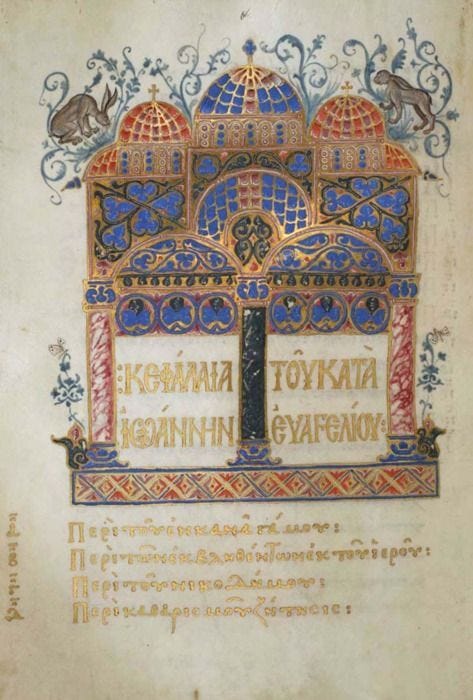
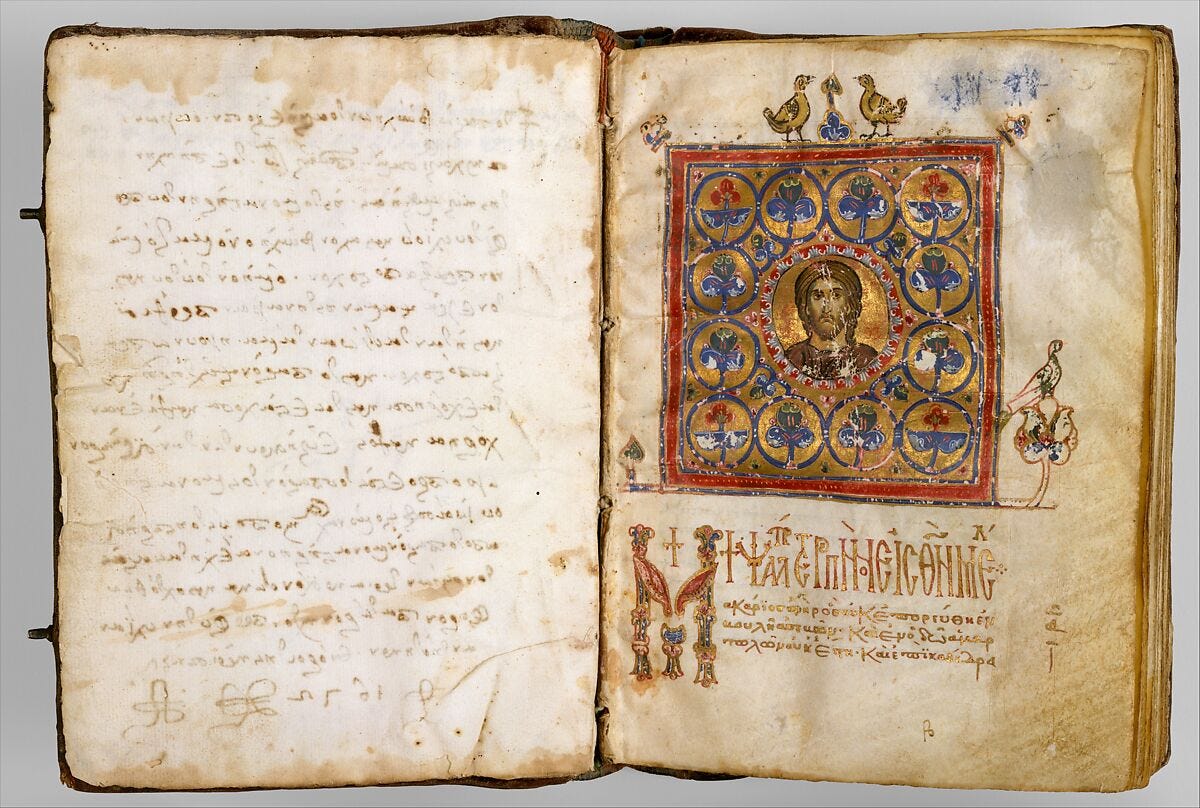
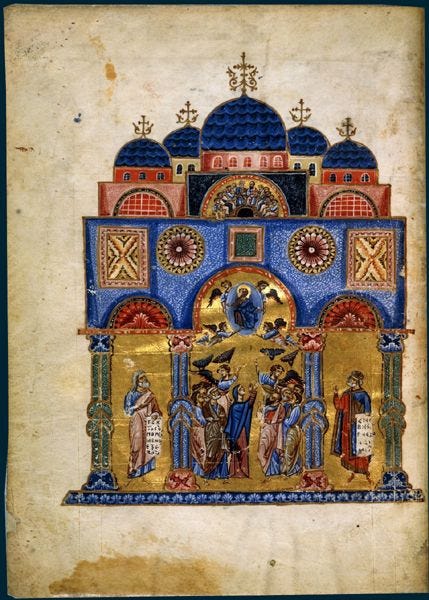
When the Western Roman Empire collapsed in 476 AD, and Europe descended into centuries of instability, Constantinople held on. The libraries were kept. The philosophical texts were copied and studied. The works of Plato, Aristotle, and the ancient historians — they survived because Byzantine scholars kept them alive. When the Renaissance happened in Western Europe, it happened largely because Byzantine scholars fleeing the Ottoman conquest in 1453 brought those manuscripts west with them.
The Renaissance is, in significant part, a Byzantine gift. Nobody teaches that.
They gave the Slavic peoples their alphabet. Saints Cyril and Methodius — Byzantine monks sent from Constantinople — invented the Glagolitic alphabet in the 9th century to translate Scripture and liturgy into Slavonic. The Cyrillic alphabet used today across Russia, Ukraine, Bulgaria, Serbia, and a dozen other nations is their legacy. Every letter of Russian text you have ever seen exists because Constantinople sent two monks into Moravia with nothing but faith and a writing system.
They gave the world its theological vocabulary. Every time you say the word Trinity — every time you say hypostasis — every time a Christian anywhere confesses that Christ is fully God and fully man — they are using language hammered out in Byzantine theological controversies, ratified at councils held in Byzantine cities, defended by Byzantine theologians. This is not Eastern Christianity’s private property. This is the common inheritance of every Christian tradition.
What Byzantium Built That Nobody Talks About
Now here’s the part that gets left out of the history books entirely. Because when people hear “Byzantine civilization,” they think theology and art. What they don’t hear about is what that theology actually built in the real world.
The first hospitals. Not Rome. Not medieval Europe. Byzantium. The Basileias — built by St. Basil the Great in Caesarea around 369 AD — was the first institution in recorded history designed to provide free medical care to the poor, regardless of who they were. It had separate wards for different illnesses. It had trained physicians. It had facilities for lepers at a time when lepers were simply driven outside the city walls and left there. St. Basil didn’t build it because a government program told him to. He built it because he believed the poor were the living icon of Christ — and you treat an icon with reverence. Byzantine hospitals spread across the empire. By the time Western Europe was developing its own medical institutions in the 11th and 12th centuries — often modeled on what Crusaders had seen in Byzantine territory — Constantinople had been running organized hospital networks for over six hundred years.
The first universities. The University of Constantinople — founded in 425 AD under Emperor Theodosius II — is among the oldest institutions of higher learning in human history. It had chairs in Greek, Latin, philosophy, rhetoric, and law. It ran continuously for centuries. While Western Europe was rebuilding from the collapse of Rome, Constantinople was producing lawyers, philosophers, physicians, and theologians in a functioning university system.
The legal foundation of the modern world. The Justinian Code — compiled under Emperor Justinian I in 529 AD — is the foundation of most legal systems in the Western world today. Civil law across Europe, Latin America, and the state of Louisiana traces directly back to this Byzantine legal project. When you talk about codified law, equal protection, and organized jurisprudence in the Western tradition, you are talking about something Constantinople handed to the world and never got thanked for.
Diplomacy is a structured institution. Byzantium essentially invented the professional diplomatic corps as we understand it — permanent ambassadors, negotiated treaties, and established international protocol. For centuries, Constantinople was the center of the known diplomatic world. Rulers from Europe, the Middle East, and Central Asia sent envoys there. The Byzantine court received them with a sophistication no Western capital could match.
Military technology that saved Christendom. Byzantine engineers maintained Roman infrastructure while developing entirely new techniques in construction, hydraulics, and military engineering. Greek fire — a Byzantine naval weapon whose exact formula was never recorded and has never been fully replicated — held off multiple Islamic naval assaults on Constantinople for centuries. That bought time not just for the empire but for the whole of European Christendom. Nobody gives Byzantium credit for that either.
None of this is trivia. All of it points to a civilization that understood the Christian faith as something for the whole human person, not just the soul. Hospitals for the sick. Universities for the mind. Law for the ordering of society. Diplomacy to prevent war. Military defense of a civilization’s right to exist. These were not secular projects running alongside the faith. They were the direct outworking of a theology that said matter matters, the body matters, this world matters — because God entered it.
That is Byzantine Christianity in practice. And it belongs to no Western empire, no Western institution, no Western historical narrative that wants to absorb the whole Christian story into its own telling.
And then there is what Byzantium gave the world that no hospital or university could contain.
A way of seeing God.
The Icons: Not Decoration. Theology.
Western Christianity — particularly after the Reformation — tends to think of religious art as illustration. Images that help people who can’t read understand the Bible stories. That is not what Byzantine iconography is.
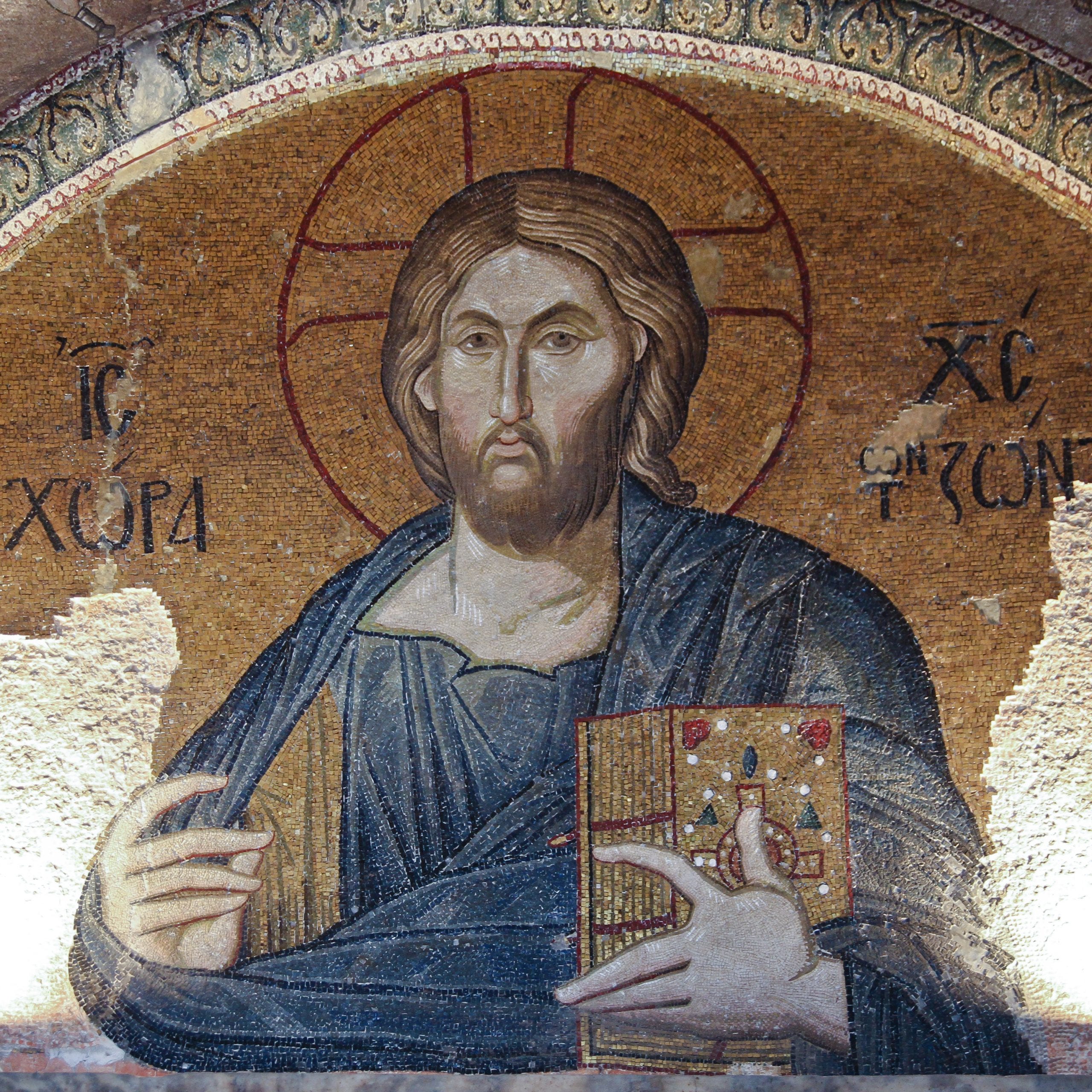
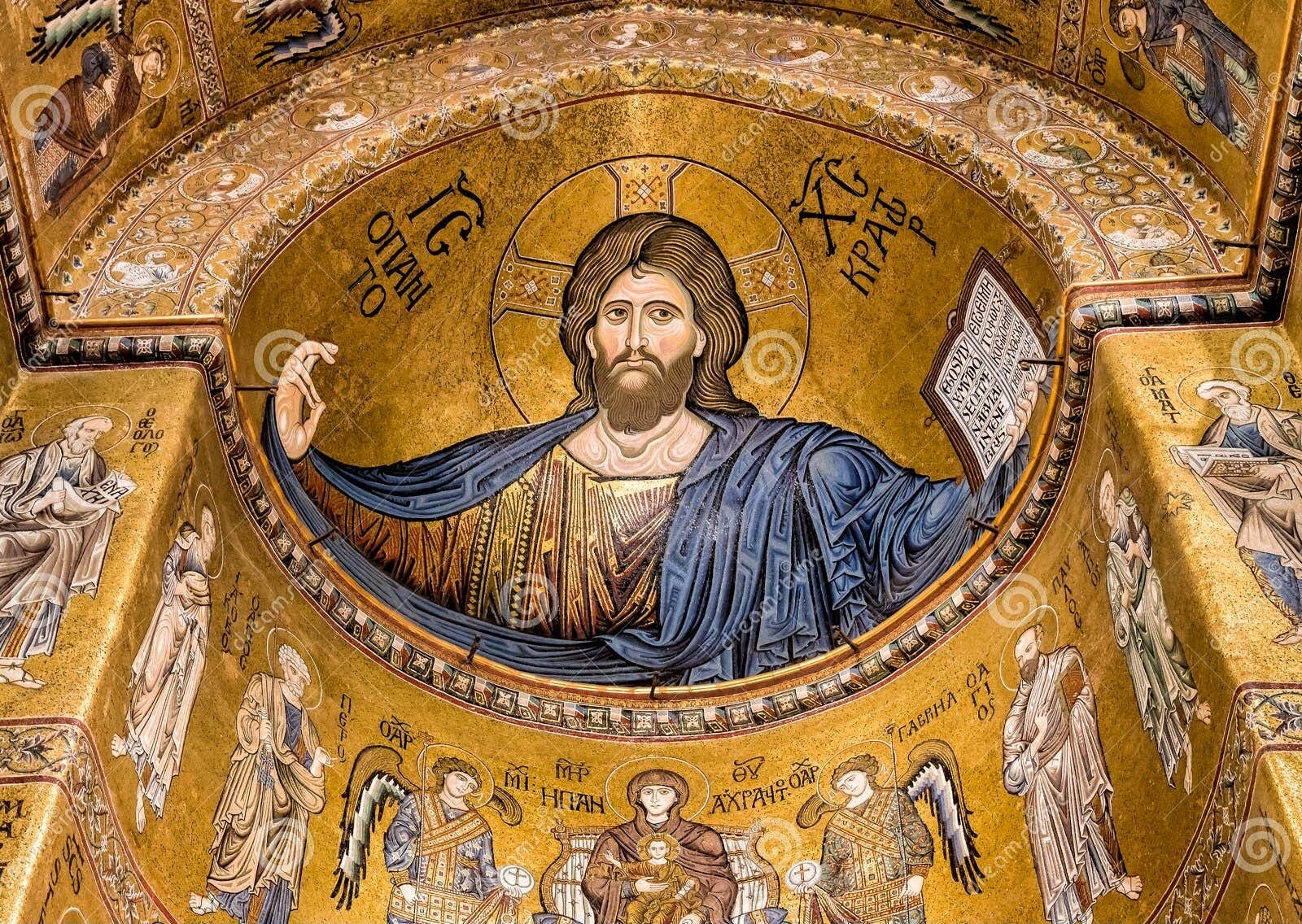
---Christ Pantocrator — “Ruler of All.” The governing image of Byzantine theology. Notice the gaze: it is not distant. It is a direct encounter.
The Seventh Ecumenical Council — held at Nicaea in 787 AD, accepted by the whole Church — defined the veneration of icons as an article of faith. Not as a concession to popular sentiment. As a Christological statement.
The argument went like this: if Christ is truly God become truly man — if the invisible, uncircumscribable God has actually taken on a human face — then that face can be depicted. To say the face of Christ cannot be shown is, implicitly, to say the Incarnation wasn’t fully real. The iconoclasts who wanted to destroy images thought they were being more spiritual. The Church said they were actually being less orthodox — they were flinching away from the full weight of what the Incarnation means.
St. John of Damascus — writing in the 8th century from inside Muslim-controlled territory, where the iconoclast Byzantine emperors couldn’t touch him — made the definitive theological case. His Three Treatises on the Divine Images is a masterpiece. He argued that matter itself had been redeemed by the Incarnation. Wood and pigment can carry holiness. The world is not a prison the soul needs to escape. It is a temple waiting to be consecrated.
Look at the Christ Pantocrator above. The elongated figure is not bad anatomically. It is intentional — a body freed from the weight of fallen matter, transfigured. The gold background is not decorative — it is uncreated light, the light the disciples saw on Mt. Tabor at the Transfiguration. The frontal gaze is not an artistic convention — it is an invitation. You are not looking at a portrait of a historical figure. You are being looked at by the living Christ.
That is a different kind of art. That is theology you can see.
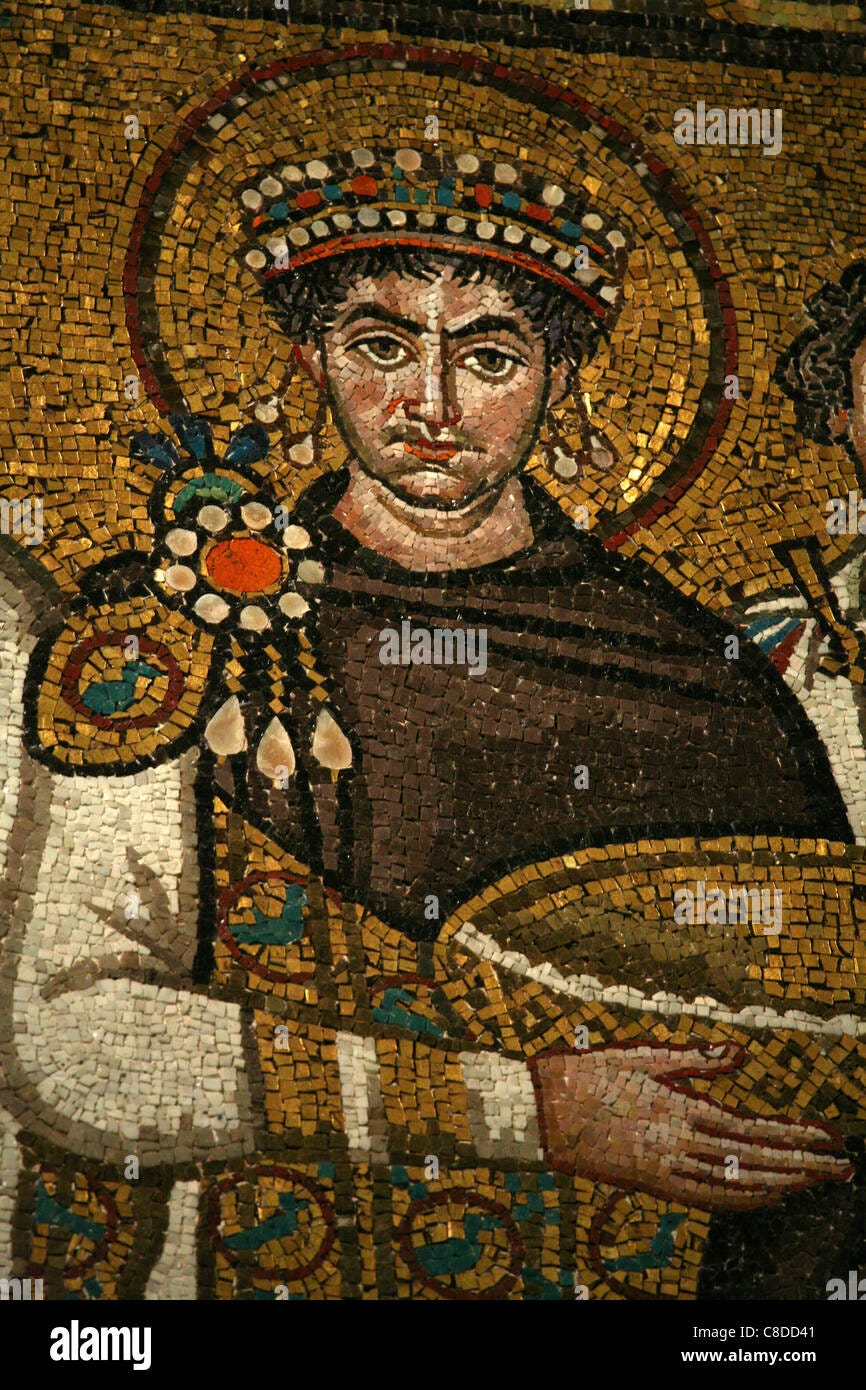
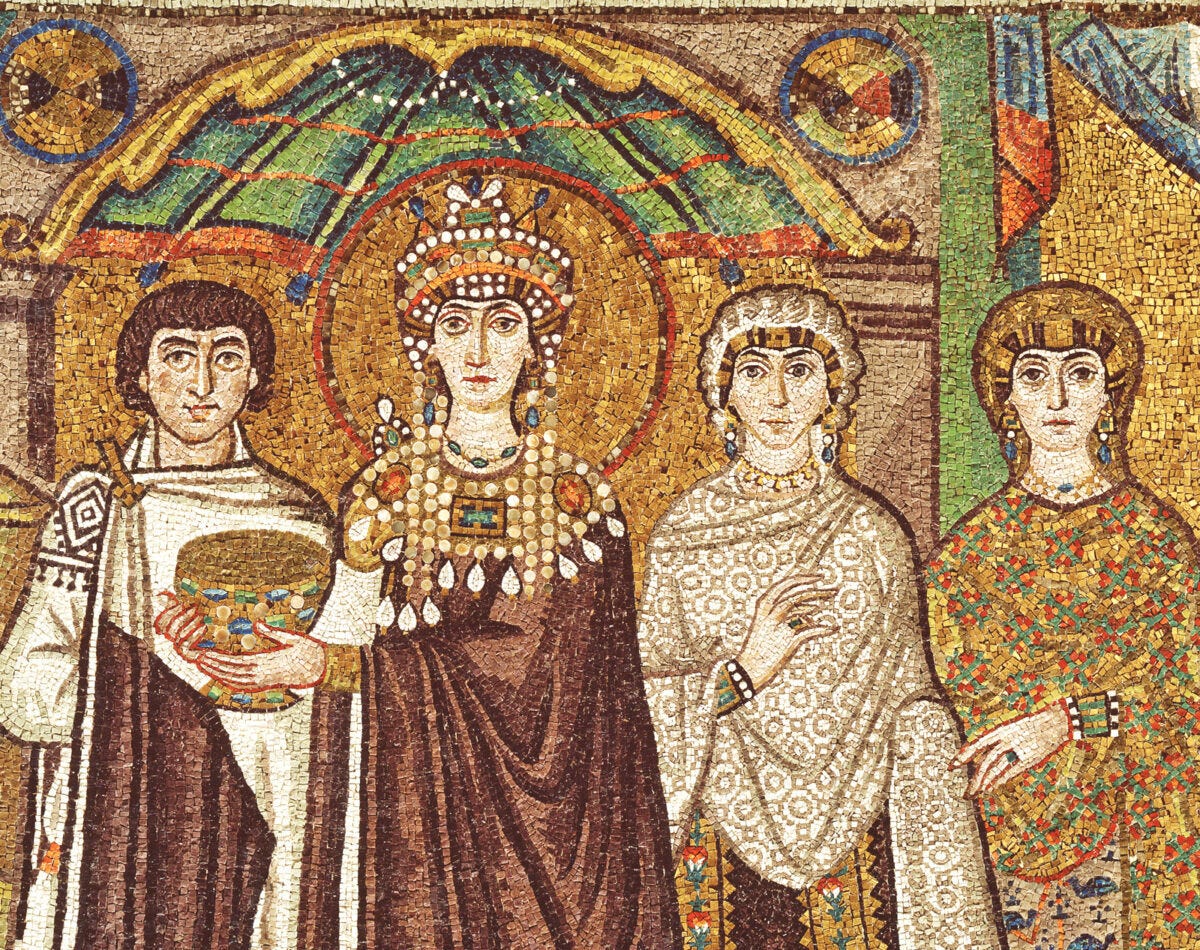
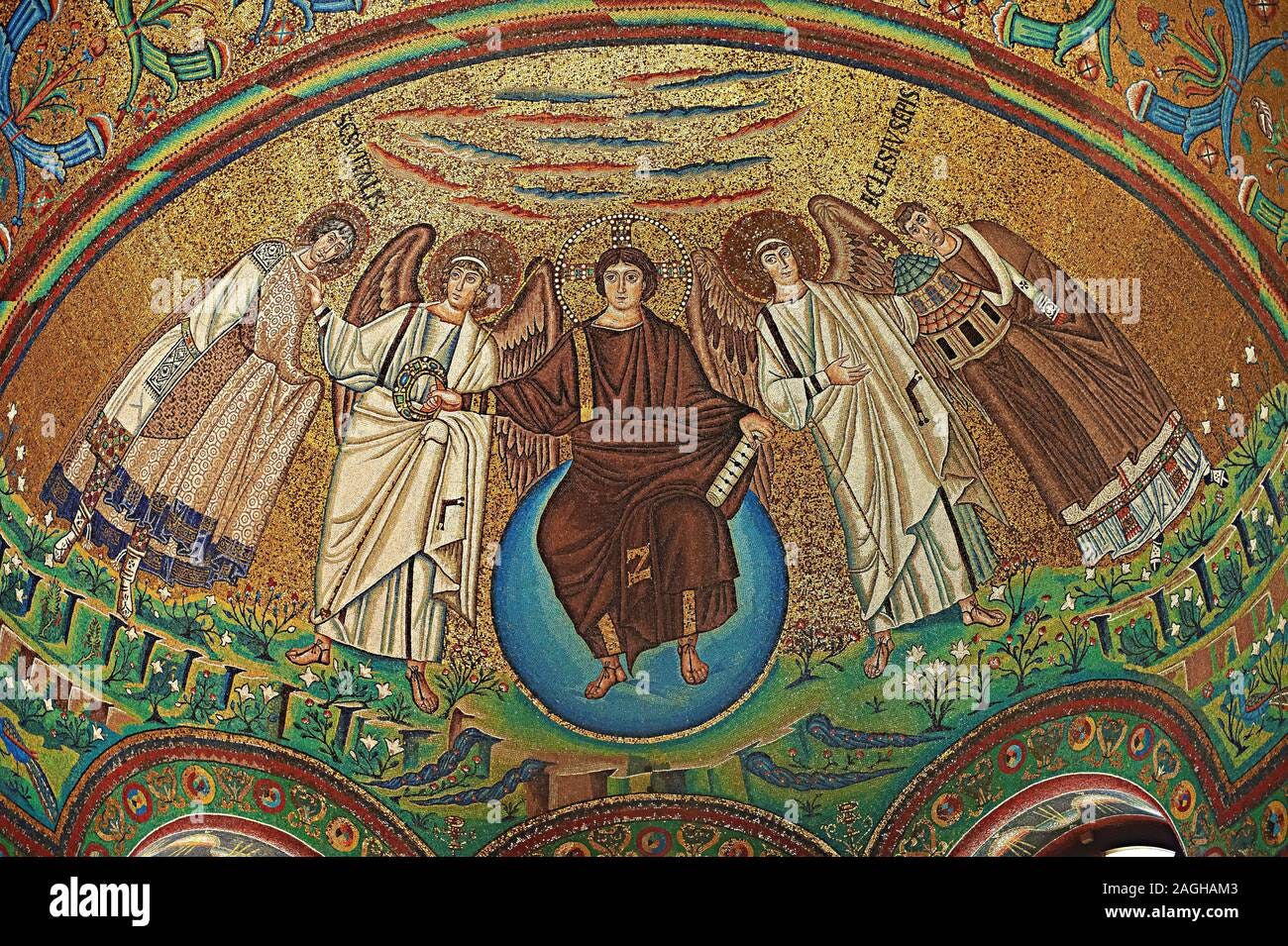
---The mosaics of Ravenna, Italy, are one of the few places in the Western world where Byzantine art survived intact. Emperor Justinian and Empress Theodora, depicted as participants in the Heavenly Liturgy.
Notice what’s happening in the Ravenna mosaics. The Emperor and Empress are not being glorified for their own sake. They are depicted as servants of the Liturgy — bearing gifts toward the altar, positioned within the worship of God, not above it. Byzantine political theology is embedded in the art: even the emperor is under Christ. Imperial power is legitimate only insofar as it serves the Kingdom of God.
That is a political theology the West eventually abandoned. And the consequences of abandoning it were significant.
The Filioque: Why One Word Matters More Than You Think
I know. You hear “theological dispute about a single word,” and your eyes glaze over. Stay with me. Because this is not about a word. It’s about how you understand God — and how you understand God shapes everything else.
The Nicene Creed — agreed upon by the whole undivided Church in 381 AD — says the Holy Spirit “proceeds from the Father.” Direct quote from John 15:26. Christ’s own words.
Somewhere in 6th-century Spain, churches started adding two words to that line: “and the Son” — in Latin, Filioque. The Spirit proceeds from the Father and the Son. This spread through Western Europe. The Popes of Rome actually resisted it at first — Pope Leo III in 810 AD had the original Creed inscribed on silver tablets in St. Peter’s without the addition, as a public statement that Rome held the original text.
But by 1014 AD, it was in the Roman Mass. And by then, the East had been watching this slow-motion change for two centuries with increasing alarm.
Why does it matter?
In Orthodox theology, the Father is the single source and fountainhead of the Trinity. The Son is eternally begotten of the Father. The Spirit eternally proceeds from the Father. This is not the Father being superior — all three Persons are coequal in divinity and glory. But the Father is the personal source of the divine life within the Trinity. This is what the Cappadocian Fathers taught. This is what the Councils received.
When you add “and the Son” — even with the best intentions — you introduce a complication. Either there are now two sources within the Trinity, which is a problem. Or the Father and Son together function as a single source, which blurs the distinction between them in a way that creates a different problem. St. Photius of Constantinople laid this out with surgical precision in the 9th century, and his argument has never been adequately answered.
More than the technical Trinitarian question: it was added without a council. Without the consent of the Eastern Church. Unilaterally. And the Council of Ephesus in 431 had explicitly forbidden any additions to the Creed.
The East wasn’t being stubborn. They were asking a simple question: who gave you the authority to change what the whole Church agreed on? Rome never gave a satisfactory answer. Because there wasn’t one.
The Crusades: When the Cross Became a Weapon Against Christians
I need to say this plainly.
In 1204 AD, the Fourth Crusade sacked Constantinople. They did not fight Muslims. They attacked the Christian city that was the heart of Eastern Christendom.
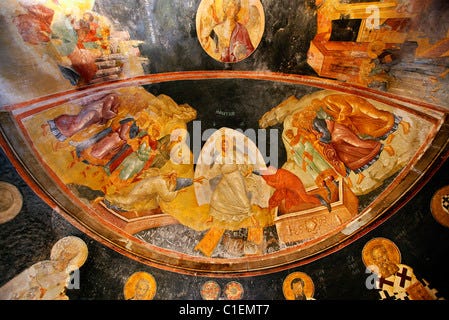
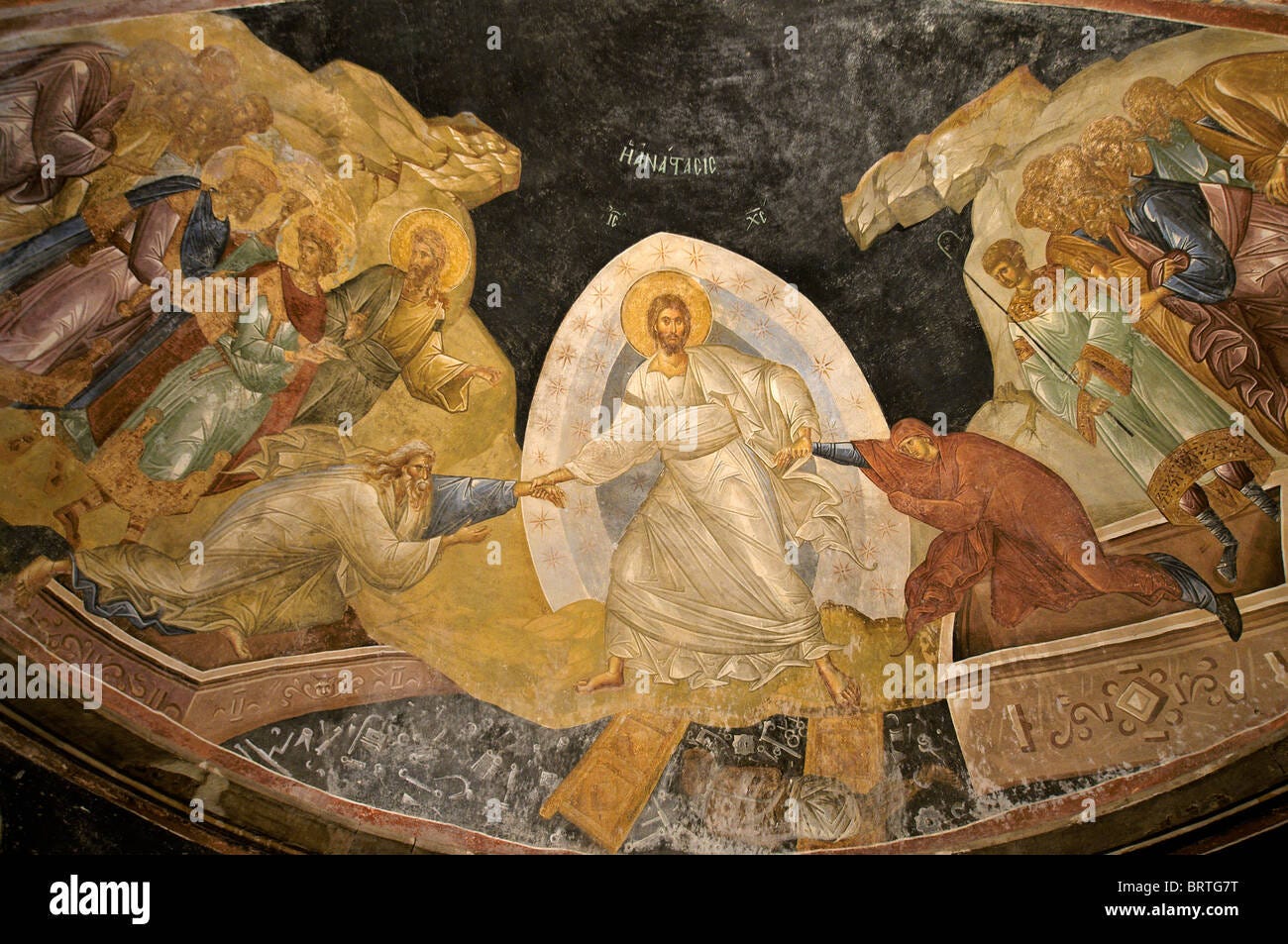
---The Anastasis fresco from the Chora Church, Constantinople — Christ harrowing hell, pulling Adam and Eve from death. One of the greatest surviving works of Byzantine art, painted just over a century after the Latin sack of the city.
They brought horses into Hagia Sophia. They melted sacred vessels. They stole relics. They installed a Latin Patriarch by force. The Byzantine historian Niketas Choniates, who witnessed it, wrote with controlled grief: “Even the Saracens are merciful compared with these men who bear the Cross on their shoulders.”
He was right. The Muslim Caliph Umar who captured Jerusalem in 638 AD protected Christian churches and guaranteed Christian access to holy sites. The Crusaders who took Constantinople in 1204 desecrated the holiest Christian city in the world.
For 57 years, Constantinople was under Latin occupation. The Orthodox Church was systematically pressured to submit to Rome. Churches were seized. The Patriarch was driven into exile.
When people wonder why the reunion between East and West remains so difficult — why ordinary Orthodox Christians feel a deep unease at the idea of absorption into Rome — the Fourth Crusade is part of what lives beneath that feeling. Named or unnamed, it is there.
Pope John Paul II apologized for the sack in 2004. Patriarch Bartholomew accepted it. That was a genuine, important gesture.
The theological divisions remain entirely unchanged.
This Heritage Doesn’t Belong to the West
Here’s something that needs to be said directly, because it gets obscured constantly in Western historical narratives:
Byzantine civilization is not a subdivision of Western history. It is not a footnote to Rome. It is not “Eastern Europe.” It is its own thing — the longest-surviving Christian empire in history, the theological and cultural mother of half the Christian world — and it belongs to no Western nation or institution.
When the Ottoman Turks took Constantinople in 1453, the West did not come to help. They watched. Some were relieved — the commercial rivalries with Byzantium had been fierce. The fall of the city that had been the New Rome, the second Rome, the heart of Christian civilization in the East — it was met in the West with something closer to calculation than grief.
The Ecumenical Patriarchate still exists. In a small compound in Istanbul. Under Turkish sovereignty. Its theological school has been closed by the Turkish government since 1971. Patriarch Bartholomew I leads the Orthodox world from there — not from wealth or political power, but from faithfulness under pressure, from a succession that has never been broken.
That is not a weakness. That is the theology of the Cross lived institutionally.
And it is Byzantine. Not Roman. Not Western. Byzantine — meaning it belongs to the living tradition that was Constantinople, that was the seven Ecumenical Councils, that was Chrysostom and Basil and Gregory, that was Hagia Sophia, that was the icons, that was the civilization that looked at the world and said: all of this can be made holy.
What the Church Always Taught
Before popes claimed universal jurisdiction. Before the Crusades. Before Vatican I defined papal infallibility in 1870, not the first century, 1870 — this is what the Church always taught about how truth is determined:
Together. In council. Received by the whole Church.
The Seven Ecumenical Councils are authoritative not because a Pope approved them. They are authoritative because the whole Church — bishops, clergy, monks, and laity — received them over time as genuine expressions of the apostolic faith. If a council met and the Church rejected its conclusions, the council didn’t stand. This happened. The Council of Florence in 1439 produced a union with Rome under enormous political pressure. The Orthodox bishops signed it. They went home. The faithful rejected it. The union died. No single authority could force it through — because that is not how the Church works.
St. Cyprian of Carthage said it in the 3rd century: “The episcopate is one, each part of which is held by each one for the whole.” Not one bishop holding it all. Every bishop holds the whole together.
St. Vincent of Lérins gave us the test in the 5th century: “What has been believed everywhere, always, and by all.” That is the standard. Not — what Rome recently defined. Not what a theological school finds internally consistent. What the whole Church has always believed, in every place, in every generation.
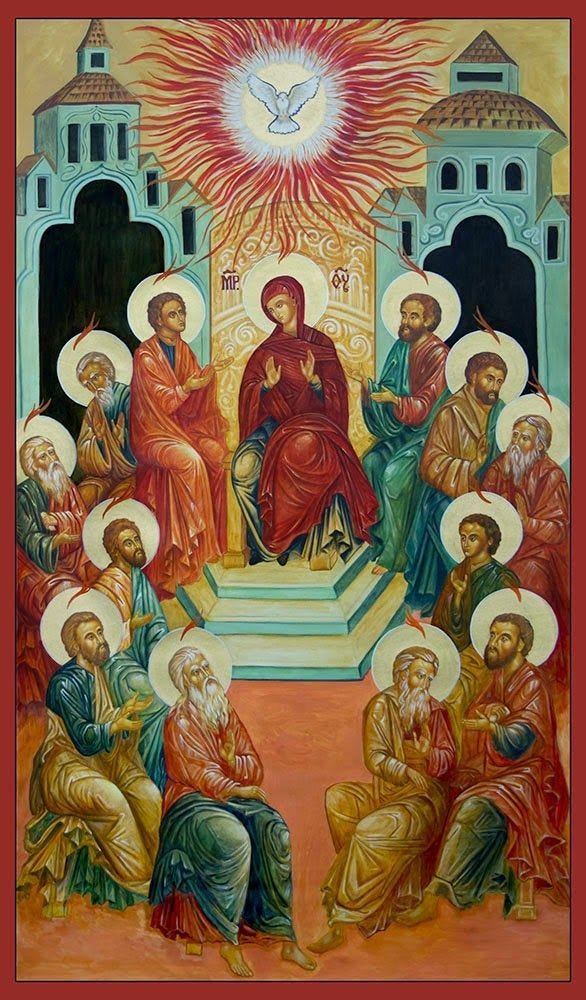
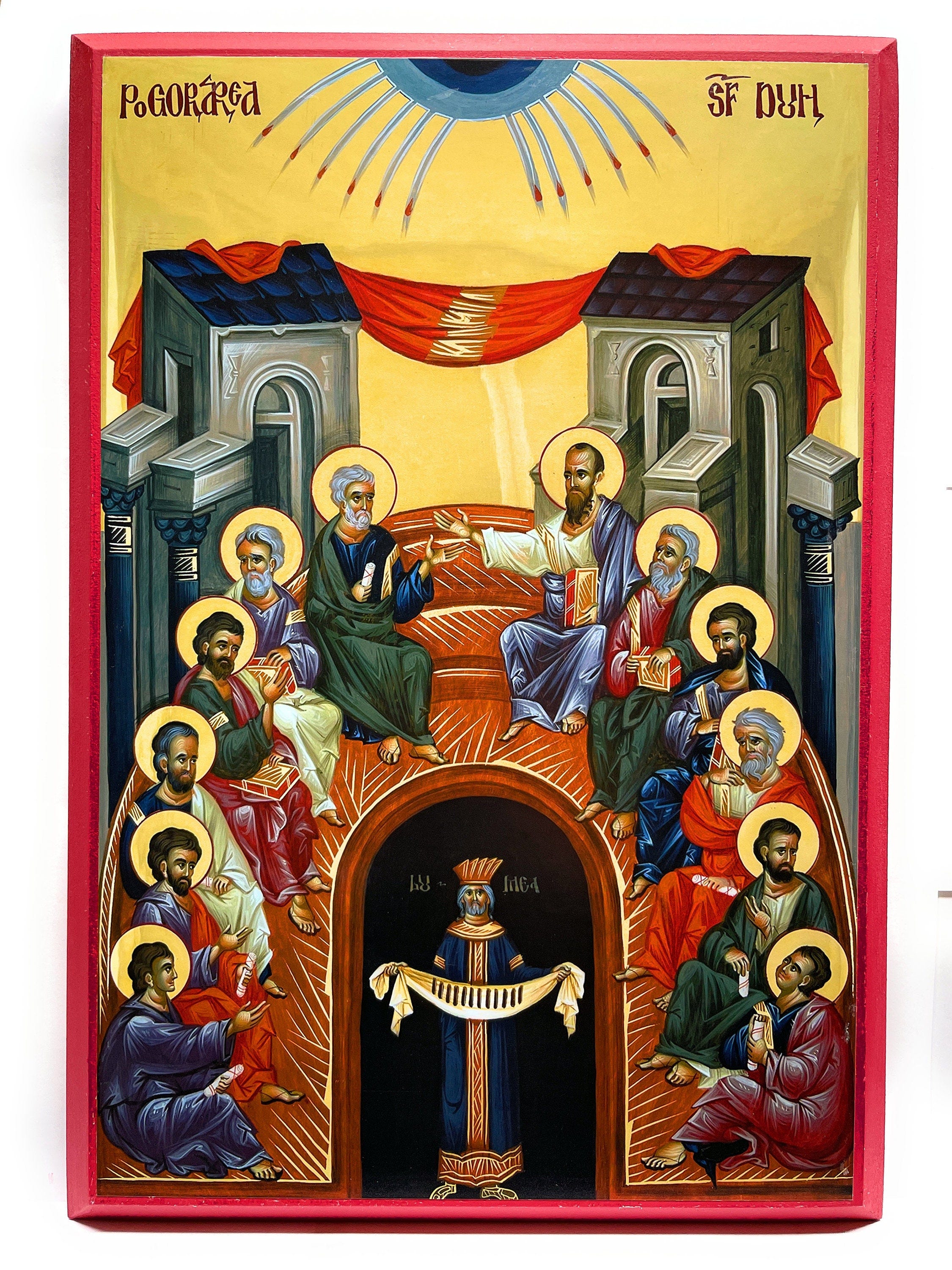
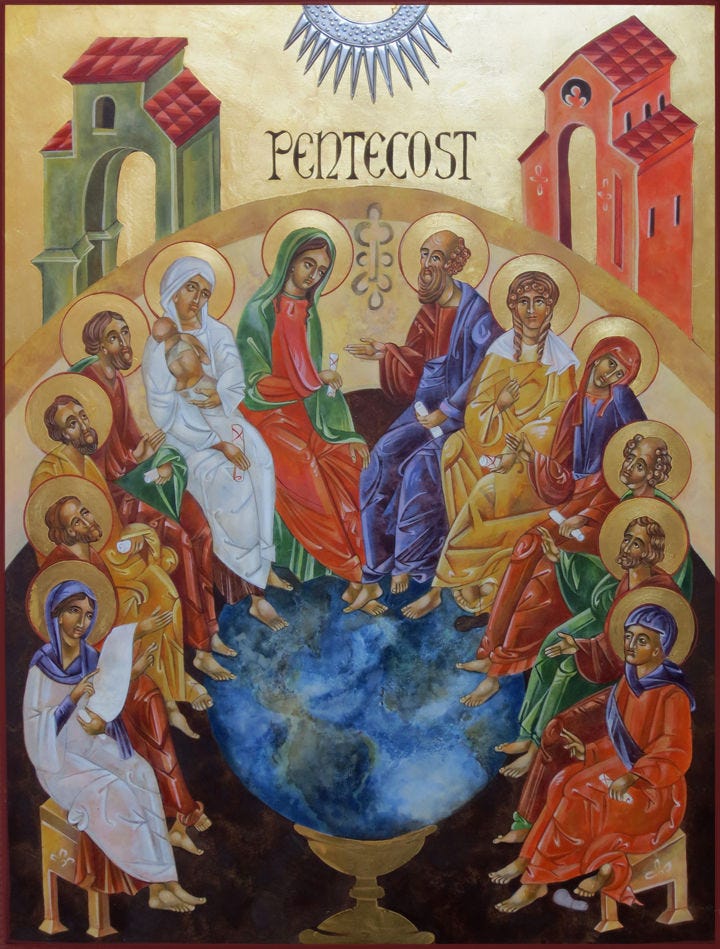
---The Pentecost icon — the Holy Spirit descending on the Apostles. The beginning of the Church. Not in Rome. In Jerusalem. In fire.
The Table Is Still Round
I’ll end the way I started — not with a verdict, but with an invitation.
The Orthodox Church does not say every Western Christian is outside God’s grace. We don’t say that. What we do say — what we cannot stop saying — is that the fullness of the apostolic faith, the unbroken theological and liturgical tradition of the undivided Church, is what we have been entrusted with. Not as a trophy. As a responsibility.
We hold that tradition not by looking down at those who received a different inheritance, but by living it as faithfully as we can — in the Liturgy, in the Sacraments, in the writings of the Holy Fathers, in the lives of saints who continue in every generation to show what a human being can become when God gets fully involved.
The Byzantine civilization that produced Hagia Sophia, the icons, the illuminated manuscripts, the theological vocabulary of the whole Christian world — that civilization did not die in 1453. It went underground. It survived in monasteries, in diaspora communities, in the Slavic nations that received its faith, in the Phanar in Istanbul, in chapels like ours.
It is still alive. And it belongs to no empire, no nation, no Western institution.
It belongs to the Church. The one that was always there, before the break, before the additions, before the claims.
Come look at what was there before.
Fr. Gabriel Torres, D.D. Chapel of the Theotokos | UAOC
“What has been believed everywhere, always, and by all.” — St. Vincent of Lérins, 5th century
For Further Reading
Timothy Ware — The Orthodox Church (start here if you’re new to this)
John Meyendorff — Byzantine Theology
Alexander Schmemann — The Eucharist: Sacrament of the Kingdom
St. John of Damascus — Three Treatises on the Divine Images
St. Photius of Constantinople — Mystagogy of the Holy Spirit
Jaroslav Pelikan — The Spirit of Eastern Christendom
Georges Florovsky — The Byzantine Fathers
Niketas Choniates — Historia (primary source on the Fourth Crusade — read it and weep)